Home › Training, Behavior & Exercise
Rottweiler Exercise Needs Without Overdoing Puppy Joints
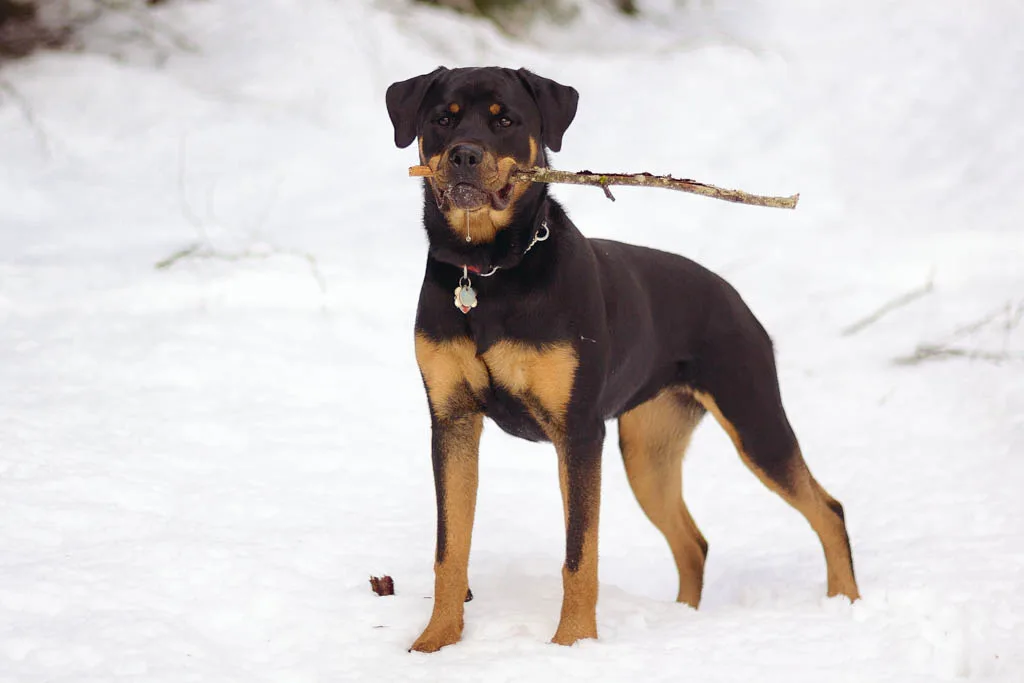
Photo: This Pilgrim's Progress via Wikimedia Commons, CC BY 2.0
🐾 Getting ready for a puppy? Try the interactive Rottweiler puppy checklist — free, no email required.
VCA rates activity moderate to high with daily walks, training and structured work to prevent boredom. Meet the need without treating a growing puppy like an adult sport dog.
Adults
Build daily movement plus manners training (adolescent manners). Boredom can show up as destructiveness or nuisance behavior—structure helps.
Puppies and joints
VCA hip dysplasia advises keeping large-breed puppies lean during growth and lists exercise and growth rate among influencing factors for a genetic disease. Prefer play on soft surfaces, short training games and measured walks your vet endorses over forced running beside a bike. Pair with puppy feeding guidance.
Watch the body
Use BCS and weigh-ins. Sudden lameness belongs in the clinic—see hip/elbow/osteosarcoma awareness.
Frequently asked questions
How much exercise do adult Rottweilers need?
VCA describes moderate-to-high activity with daily exercise—walks, training and structured activities—to prevent boredom. There is no single official mile count in the breed standard; your veterinarian and trainer help set a plan for your dog.
Should puppies jog long distances?
Be cautious. VCA's hip-dysplasia overview stresses keeping large-breed puppies at a lean weight during growth and notes diet, exercise and growth rate among factors that can influence a genetic disease. Ask your vet before repetitive high-impact exercise on growing joints.
What counts as mental exercise?
Training sessions, scent games and puzzle feeders can tire a working brain. Pair them with physical walks rather than replacing all activity.
What if my dog suddenly refuses exercise?
Reluctance, limping or yelping needs a veterinary exam—especially given joint and osteosarcoma awareness in the breed. Do not push through pain.
A quick note: this guide is general information from published sources, written by dog lovers, not a veterinarian. Your own vet knows your dog's history, so check with them before changing food, exercise or treatment.
Sources
Keep reading
Rottweiler Socialization and Training: Building a Steady Guardian
What AKC and VCA say about early socialization, confident leadership and training for Rottweilers—without promising a finished temperament overnight.
Feeding a Rottweiler Puppy: Large-Breed Growth and Portions
Why many vets prefer measured large-breed puppy feeding for Rottweilers—VCA growth and hip-dysplasia notes, WSAVA body condition, without invented calorie charts.

Rottweiler Hip & Elbow Dysplasia and Osteosarcoma: Vet Awareness Guide
What VCA, OFA, ACVS and Cornell say about hip dysplasia, elbow dysplasia and osteosarcoma risk in Rottweilers—screening language, warning signs and why this is awareness (not a diagnosis).