Home › Training, Behavior & Exercise
Training an Adolescent Rottweiler: Manners and Leash Skills
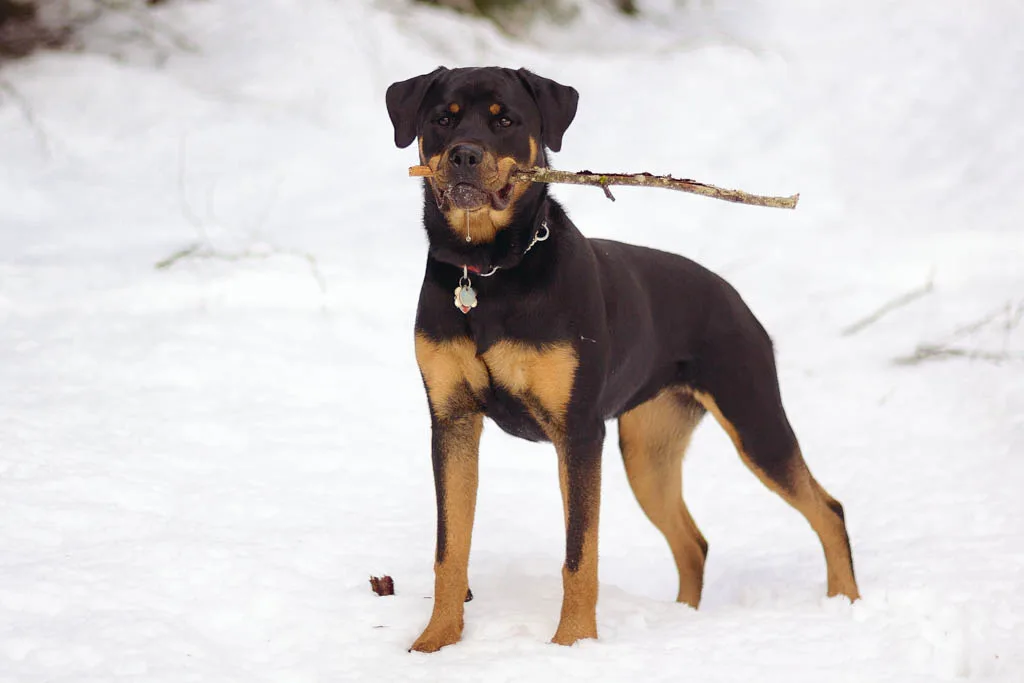
Photo: This Pilgrim's Progress via Wikimedia Commons, CC BY 2.0
🐾 Getting ready for a puppy? Try the interactive Rottweiler puppy checklist — free, no email required.
Adolescence turns a cute Rottweiler puppy into a strong teenager overnight. VCA emphasizes consistent leadership, daily exercise and early socialization so protectiveness stays manageable.
Skills to keep drilling
AKC basic training highlights clear cues, short positive sessions and real-life practice. Name attention, sit, settle on a mat, polite leash walking and calm greetings before the dog rehearses jumping on guests.
Methods that fit a powerful breed
AVSAB’s humane training position supports reward-based learning and states aversive methods should not be used. Pair training with appropriate exercise (exercise and puppy joints) so the dog is not asked to “be good” while exploding with unmet needs.
Build on early socialization
Revisit socialization and training. New places still count in adolescence—ask your vet how to balance outings with health precautions.
Frequently asked questions
Why do adolescents feel harder?
Size and confidence grow quickly. VCA notes Rottweilers need consistent leadership, daily exercise and structured activities, and may become overly protective without training. Refresh the habits from our socialization guide rather than waiting for 'the phase' to pass.
How should leash pulling be handled?
Use reward-based loose-leash practice and management (shorter sessions, secure equipment). AVSAB supports reward-based methods and advises against aversive techniques that rely on force or pain. A powerful adolescent pulling into traffic is a safety issue—hire a qualified trainer if needed.
Should the whole household use the same rules?
Yes. AKC basic-training guidance emphasizes clear cues and practice in real life. Mixed rules about furniture, doorways and greetings confuse a smart working breed.
When is professional help needed?
Growling, guarding, panic or inability to walk safely in public deserves a veterinarian check (pain can change behavior) and a force-free trainer or behavior professional. Do not run dominance challenges.
A quick note: this guide is general information from published sources, written by dog lovers, not a veterinarian. Your own vet knows your dog's history, so check with them before changing food, exercise or treatment.
Sources
Keep reading
Rottweiler Socialization and Training: Building a Steady Guardian
What AKC and VCA say about early socialization, confident leadership and training for Rottweilers—without promising a finished temperament overnight.

Rottweiler Exercise Needs Without Overdoing Puppy Joints
Rottweiler exercise needs from VCA—moderate to high daily activity—balanced with large-breed puppy joint caution from hip-dysplasia growth guidance.